
Key Points:
- If your organic search traffic is declining, it’s not random — it’s strategic drift. Search behavior in industrial manufacturing and B2B marketing has fundamentally changed.
- AI is reshaping visibility. If your content isn’t optimized for Answer Engine Optimization (AEO), you’re losing clicks before buyers ever reach your site.
- Generic content doesn’t rank — and it doesn’t convert. Industrial marketing today demands technical depth, application specificity and real authority.
- Your competitors are investing. Many industrial manufacturers are building searchable content ecosystems, not just publishing blogs.
- SEO without revenue alignment is wasted effort. High rankings mean nothing if they don’t target high-margin products, priority verticals and strategic growth markets.
You didn’t wake up one morning and decide to lose visibility.
But your analytics did.
A slow dip. Then a sharper slide. Then that uneasy realization: Our organic search traffic is declining.
For industrial manufacturers and B2B marketing leaders, this isn’t just a marketing metric. It’s a leading indicator of pipeline health. Of brand relevance. Of whether your company is being found at the exact moment buyers are searching for solutions.
And in industrial marketing, that moment matters more than ever.
Let’s unpack what’s really happening — and how to fix it.
The Industrial Marketing Reality: Search Has Changed
Organic search in 2026 doesn’t look like it did in 2016. Or even 2022.
Your buyers — engineers, plant managers, procurement leaders, operations executives — are searching differently. Search engines are ranking differently. AI is summarizing answers instead of simply listing websites.
If your industrial manufacturing company hasn’t evolved alongside those shifts, your traffic decline isn’t random.
It’s structural.
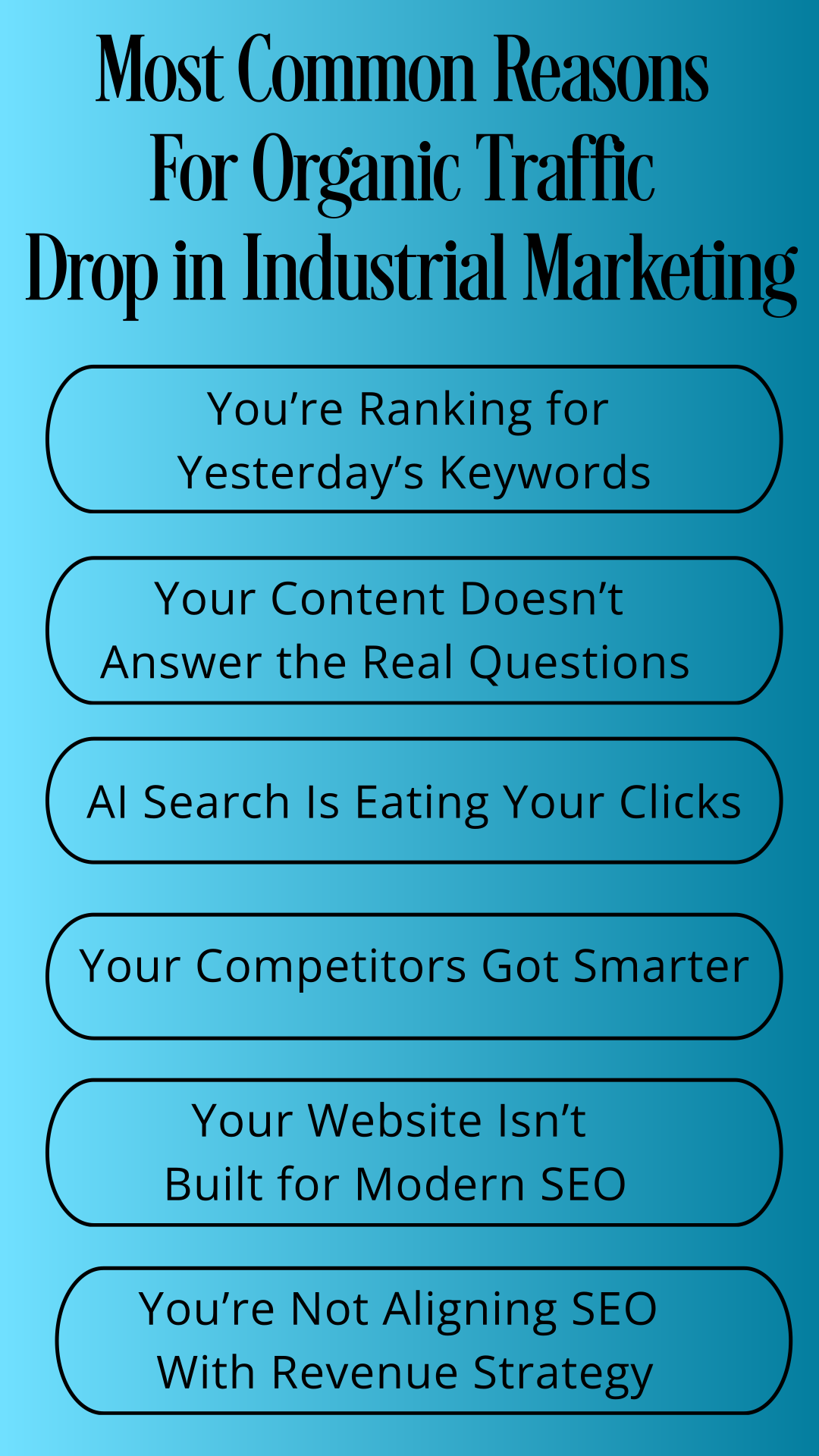
Here are the most common reasons we see organic traffic drop in industrial marketing and B2B marketing environments.
1. You’re Ranking for Yesterday’s Keywords
In industrial marketing, terminology evolves fast. Applications change. Regulations shift. Technologies advance.
But many industrial marketing strategies are still targeting broad, outdated, or vanity keywords.
If your site is optimized for:
- High-volume but low-intent phrases
- Generic product terms
- Legacy naming conventions
…you may be attracting less qualified traffic — or losing rankings entirely.
Modern industrial marketing must focus on:
- Application-specific search queries
- Industry-specific use cases
- Long-tail, high-intent buyer questions
- Technical problem-solving phrases
Because your buyers aren’t searching for “valve.” They’re searching for “Butterfly valve for slurry transfer in dairy production.”
Specificity wins.
2. Your Content Doesn’t Answer the Real Questions
 Search engines — and AI search tools — now reward clarity and authority.
If your industrial marketing content:
- Skims the surface
- Avoids technical depth
- Sounds generic
- Lacks proof points
…it won’t rank.
Industrial buyers don’t want fluff. They want answers. They want validation. They want confidence.
High-performing industrial marketing content:
- Explains technical challenges clearly
- Addresses compliance and risk
- Compares options transparently
- Uses real-world data and case studies
- Demonstrates expertise
If your blog posts could apply to any company in any industry, search engines know it. And so do buyers.
3. AI Search Is Eating Your Clicks
Here’s the uncomfortable truth: even if you’re ranking, you might be losing traffic.
AI-generated summaries, featured snippets and answer boxes satisfy user intent without requiring a click.
If your content isn’t optimized for Answer Engine Optimization (AEO), your brand may be invisible in these summaries.
Industrial marketing today requires:
- Clear, direct answers to common B2B questions
- Structured content with headings and concise explanations
- FAQ sections that mirror how buyers search
- Schema-ready formatting
If you’re not formatting content for how search engines present information, not just how they index it, your traffic will erode.
4. Your Competitors Got Smarter
The industrial manufacturing space is no longer digitally asleep.
Your competitors are investing in:
- Technical SEO
- Pillar content strategies
- Application-specific landing pages
- Thought leadership in niche verticals
- Content aligned with the entire buyer journey
Industrial marketing used to be brochure-driven. Now it’s ecosystem-driven.
If you’re publishing one blog a quarter while competitors are building searchable knowledge libraries, the rankings will reflect that gap.
5. Your Website Isn’t Built for Modern SEO
Search performance isn’t just about content. It’s about infrastructure.
Declining organic traffic can stem from:
- Slow site speed
- Poor mobile performance
- Weak internal linking
- Thin product pages
- Duplicate technical content
- Broken redirects from past site migrations
Industrial manufacturing websites often accumulate technical debt over time. Without routine SEO audits, that debt compounds — and rankings fall.
6. You’re Not Aligning SEO With Revenue Strategy
This is the biggest mistake we see in industrial marketing.
SEO becomes a marketing metric instead of a growth lever.
Industrial marketing should never chase traffic for traffic’s sake. It should target:
- High-value verticals
- Priority product lines
- Strategic geographic markets
- High-margin applications
If your SEO strategy isn’t aligned with your commercial strategy, your organic traffic might decline — or worse, it may grow in ways that don’t generate revenue.
Traffic without intent is noise.
How to Reverse Declining Organic Traffic in Industrial Marketing
 If your organic search traffic is slipping, here’s where to start:
1. Conduct a Deep Industrial SEO Audit
Not just keywords. Audit content gaps, technical structure, the competitive landscape and AI visibility.
2. Rebuild Around Pillar Topics
Create comprehensive content ecosystems around:
- Core technologies
- Key applications
- Industry verticals
- Compliance and regulatory requirements
3. Optimize for Answer Engine Optimization
Add structured FAQs. Write concise answer blocks. Format content for AI summaries.
4. Develop Technical Thought Leadership
Engineers want engineers. Industrial marketing must demonstrate expertise, not marketing gloss.
5. Align SEO With Sales Priorities
Target search visibility in areas that drive revenue — not just impressions.
The Bigger Question: Are You Building Enduring Visibility?
Organic search traffic doesn’t decline by accident. It declines when strategy stands still.
Industrial marketing requires precision. It requires technical depth. It requires alignment between content, data and commercial goals. And it requires an approach built for how B2B buyers actually search today.
At DeanHouston, we don’t chase rankings. We build industrial marketing ecosystems that engage engineers, influence decision-makers and accelerate sustainable growth. We align SEO and AEO strategies with your revenue priorities — so your visibility drives measurable impact, not vanity metrics.
If your organic traffic is declining, that’s not just a problem. It’s a signal.
Let’s turn it into momentum.
Ready to reclaim your search visibility and build a smarter industrial marketing strategy? Connect with DeanHouston today — and let’s engineer growth together.
Frequently Asked Questions About Declining Organic Traffic
Why is my industrial marketing website losing organic traffic?
Most commonly, it’s due to outdated keyword targeting, increased competition in industrial marketing, a lack of AEO optimization, or technical SEO issues that impact search visibility.
How does AI affect organic traffic for industrial manufacturing companies?
AI-powered search engines summarize answers directly on results pages. If your content isn’t structured and optimized for answer engines, you may lose clicks even if you rank.
How long does it take to recover organic search traffic?
In industrial marketing environments, meaningful recovery typically takes 3-6 months, depending on content depth, technical issues and the competitive landscape.
Is SEO still important in industrial marketing?
More than ever. Industrial buyers conduct extensive online research before contacting sales. if you’re not visible during that research phase, you’re not in the conversation.