
As supply chains move closer to home, B2B manufacturers have an opportunity to turn where they make products into a much more powerful story about how they create value.
Walk the floor of almost any manufacturing trade show in America and you won’t have to look far to find the flag. It’s on booth graphics, product displays and brochures. Visit enough manufacturing websites and you’ll encounter plenty of variations of the same message: Proudly Made in America, American Made, or Built in the USA.
There are good reasons manufacturers are talking about it. Reshoring and domestic sourcing continue to gain momentum as companies reconsider the risks, costs and complexity built into global supply chains. According to the 2026 USA Reshoring Survey, 36% of OEM respondents had reshored or were actively engaged in additional reshoring, while 63% planned U.S. capital expenditures in 2026 or 2027 to support reshoring or other domestic expansion.
At the same time, McKinsey estimates that roughly one-quarter of the $3 trillion in manufactured goods imported into the United States each year face at least two significant trade dependencies involving national-security importance, concentrated supply or geopolitical distance.
Manufacturing closer to the customer clearly matters. But here’s the problem from a marketing perspective: “Made in America” tells customers where a product comes from, but it doesn’t give them a compelling reason to buy it.
When a Differentiator Stops Being Different
For years, domestic manufacturing could itself be a meaningful point of differentiation. In certain markets, simply being able to say a product was manufactured in the United States separated one company from competitors sourcing or producing overseas. As more industrial manufacturers invest domestically, however, the message becomes less distinctive.
Imagine you’re evaluating three suppliers and all three prominently advertise that their products are manufactured in America. What happens next? You start looking for another reason to choose.
That’s why CEOs and B2B marketing professionals should think beyond the label itself. The opportunity isn’t simply to market the location of your manufacturing operation. It’s to market what that location allows your company to do better for the customer. That is a much more compelling story.
Market What the Location Makes Possible
 Consider a manufacturer with production in Ohio serving customers throughout the Midwest. The obvious marketing message might be: “Our products are proudly manufactured in Ohio.” That’s an attribute.
Now take the thought one step further. Perhaps having engineering, production and service teams closer to customers means engineers can get onsite faster when an application problem develops. Maybe it allows the company to react more quickly when specifications change, reduce transportation complexity or collaborate directly with customers during product development. Suddenly, “Made in Ohio” isn’t the story; responsiveness is.
The same thinking applies to supply-chain resilience. The 2026 Reshoring Survey found that OEMs experiencing benefits from reshoring frequently cited improved speed to market, better fulfillment, on-time delivery and logistics savings. Those are tangible business outcomes, and they’re far more meaningful to a purchasing manager, operations leader or CEO than geography alone.
Your Customers Aren’t Buying Your Attributes
This challenge isn’t unique to the reshoring conversation. In fact, it exposes one of the most common problems in B2B manufacturing marketing. Manufacturers are often very good at explaining what they are.
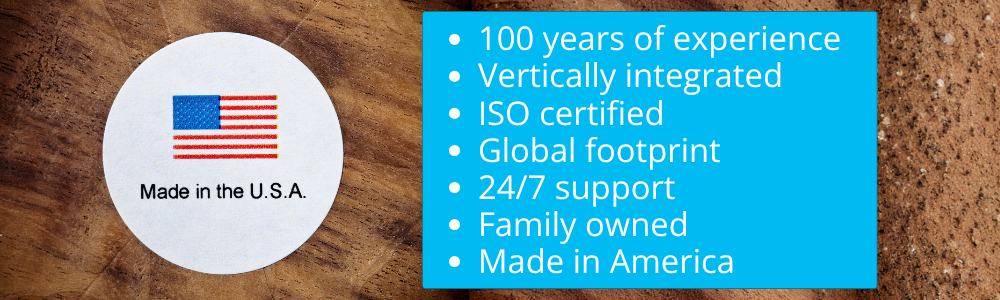
- 100 years of experience
- Vertically integrated
- ISO certified
- Global footprint
- 24/7 support
- Family owned
- Made in America
Those statements may all be true, and they may all represent genuine competitive strengths. The problem is that none of them automatically communicates customer value.
A customer doesn’t benefit simply because you’ve been in business for 100 years. They benefit because those 100 years have created institutional knowledge that helps your team recognize problems faster, recommend better solutions and avoid mistakes someone with less experience might not see coming.
Vertical integration isn’t inherently valuable either. It becomes valuable when it gives you greater control over quality, availability or lead times. The attribute isn’t the message. What the attribute makes possible is the message.
Turn Manufacturing Advantages Into Customer Advantages
This is where industrial marketing leaders and CEOs should challenge their organizations. Take the claims that appear most frequently across your website, sales presentations, trade show materials and corporate messaging, and ask a deceptively simple question: Why should our customer care?
If you’re Made in America, what does that allow you to deliver that an overseas competitor may struggle to match?
- Faster response
- Greater supply-chain visibility
- Easier access to engineering expertise
- More dependable delivery
- Less exposure to disruption
There isn’t one universal answer, because the answer should come from what your customers actually value and what your organization can genuinely deliver.
That’s also why effective technical products marketing can’t be created by the marketing department in isolation. Sales hears the objections. Engineering understands where the company solves difficult problems. Operations knows what the organization can deliver consistently. Leadership understands where the business intends to compete. The strongest positioning emerges when those perspectives come together.
Made Here. Valuable Everywhere.
 The resurgence of interest in American manufacturing creates an enormous opportunity for domestic manufacturers, but the companies that capture it won’t do so simply by adding an American flag to their homepage. They’ll do it by understanding what their manufacturing footprint means to the people buying from them.
Because ultimately, customers aren’t purchasing geography; they’re purchasing confidence that the product will perform, the order will arrive, the supplier will respond and the company standing behind it will be there when needed.
Made in America tells customers where you make something. Great marketing tells them why that matters.
If you’re ready to turn what makes your company different into a story your customers value, contact DeanHouston and let’s build a marketing strategy that gives them a reason to choose you.