

Walk into almost any industrial manufacturing facility and you’ll hear a familiar claim: “We’re data-driven.” And in many ways, that statement isn’t wrong. Most B2B manufacturers today are surrounded by dashboards, regularly scheduled reports, active CRM systems and marketing platforms that track everything from engagement to pipeline movement.
From a distance, it looks like exactly what modern industrial marketing is supposed to be — well-instrumented, measurable and informed. But if you spend enough time inside those organizations, especially in pipeline reviews, quarterly planning sessions or post-mortems on missed targets, a different pattern starts to emerge. Data exists, but it isn’t consistently shaping what happens next.
When Data Becomes Decoration
There’s an uncomfortable truth that doesn’t get talked about often enough: having data and using it are two very different things.
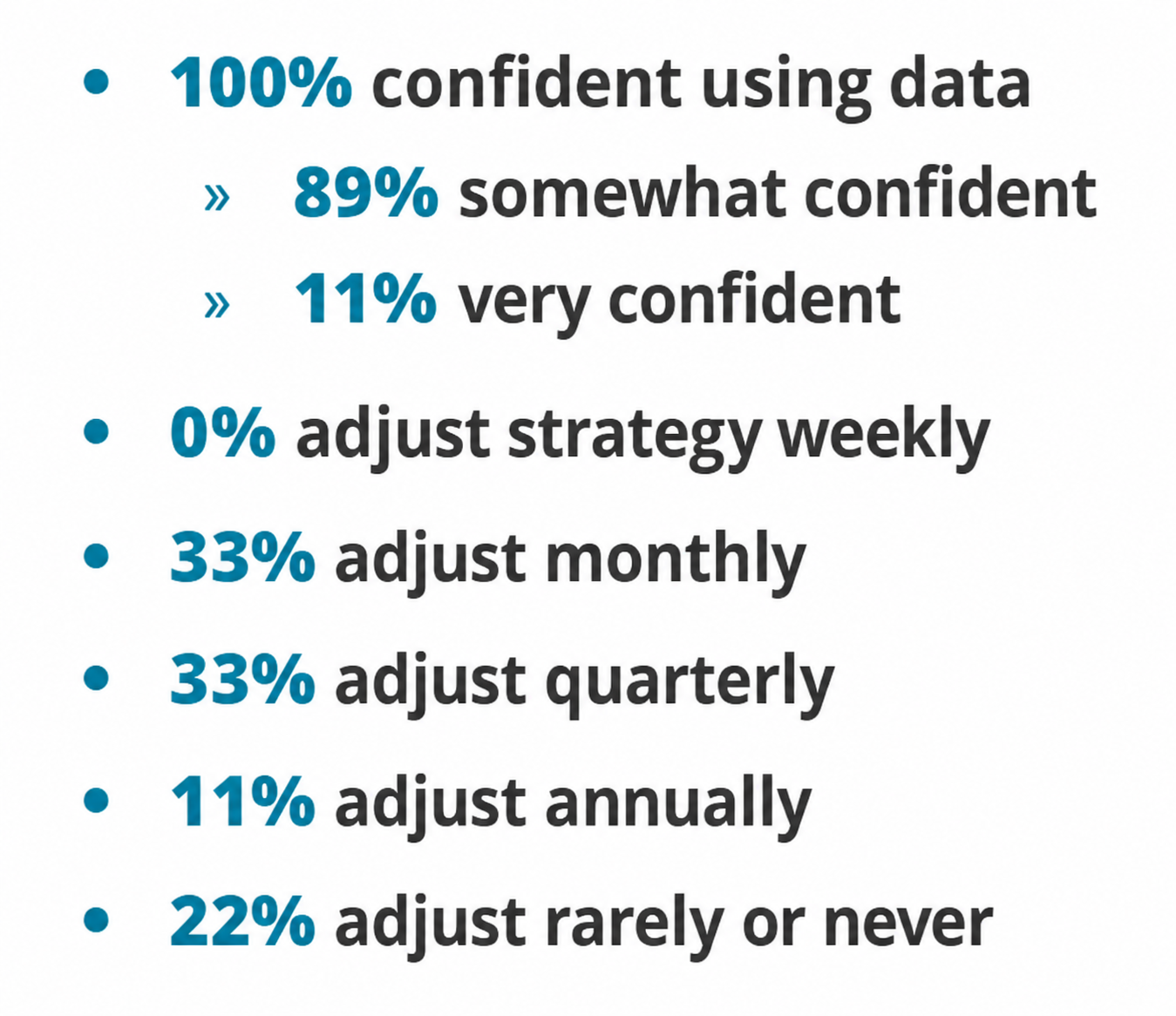
According to our Sales + Marketing Trend Report, every respondent said they’re at least somewhat confident in their ability to use data, yet 22% admitted they rarely or never adjust their marketing strategy based on it. That disconnect shows up in subtle ways. Teams gather insights, review performance and build reports, but the decisions that follow often look very similar to the ones made before the data was introduced.
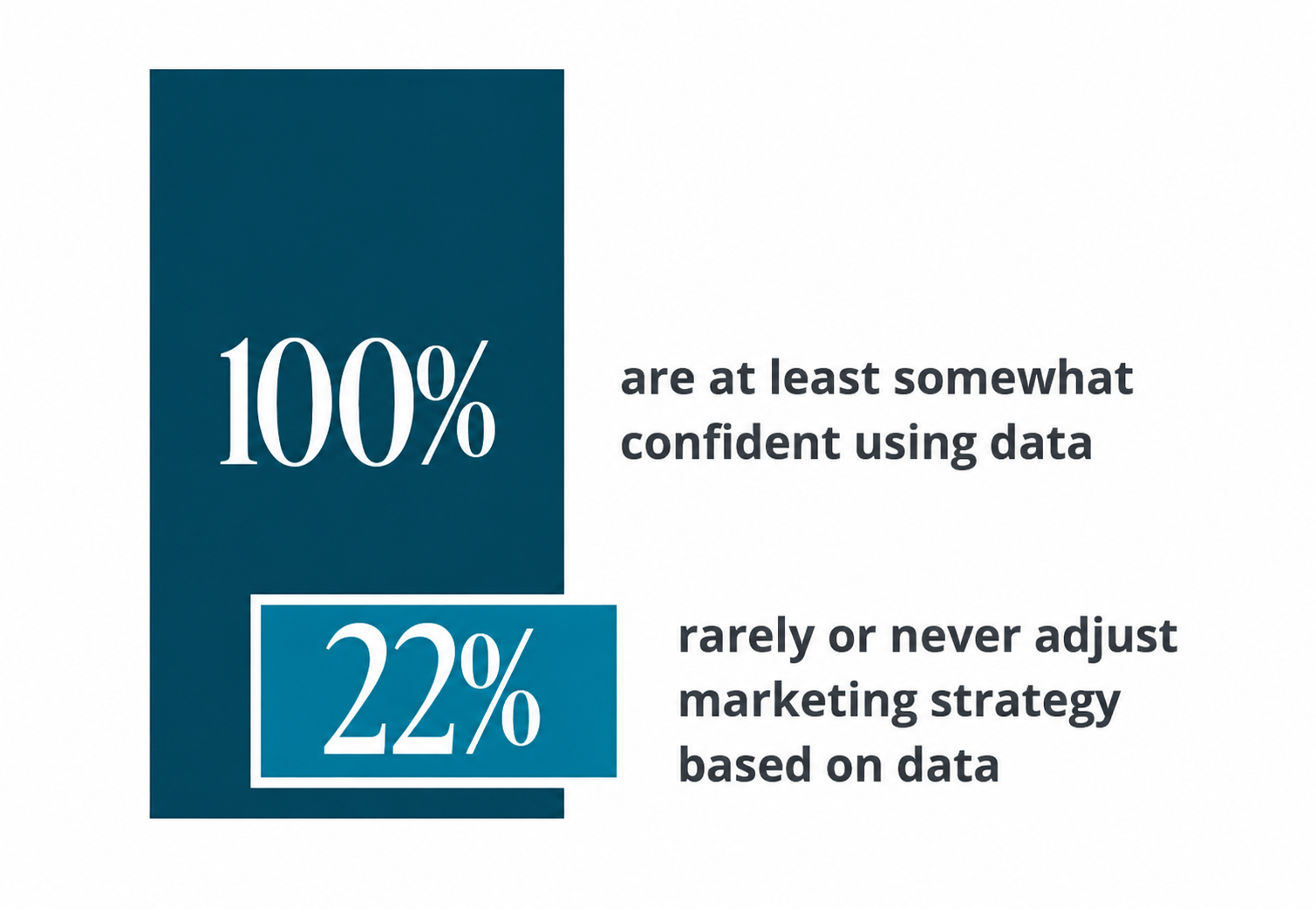 In many industrial organizations, data plays a more supporting role in storytelling than in shaping direction. It’s not that the information isn’t valuable. It’s that it isn’t arriving with enough clarity or urgency to influence decisions in real time.
The Gap Between Insight and Action
If data is meant to guide strategy, the more useful question isn’t whether you have access to it, but how frequently it changes your behavior.
In high-performing B2B sales and marketing environments, data is part of an ongoing conversation rather than something that gets reviewed periodically. It informs weekly discussions, challenges assumptions and leads to small adjustments that keep teams aligned with what’s actually happening in the market. That kind of operating rhythm is still the exception in industrial settings.
The study found that not a single company adjusts its strategy on a weekly basis. Most changes occur monthly or quarterly, and in some cases even less frequently, so decisions are often based on past performance rather than current signals. By the time the data leads to action, the opportunity it highlighted may have already shifted or disappeared.
The Illusion of Being Data-Driven
Part of the challenge is that “data-driven” has become a catch-all phrase that means different things to different teams. For some organizations, it means having access to CRM data and marketing analytics. For others, it means reviewing performance reports or presenting metrics in meetings. Those activities create visibility, but they don’t necessarily lead to change.
True data-driven marketing and effective B2B sales alignment require something more demanding: a willingness to let information interrupt assumptions and redirect effort. That might mean shifting budget away from a channel that has historically performed well, reprioritizing accounts based on new buying signals or adjusting messaging in response to how prospects are actually engaging.
That level of responsiveness is where many organizations struggle, not because they lack data, but because acting on it requires a different kind of discipline.
Why the Data Isn’t Landing
When data doesn’t translate into action, the instinct is often to look at tools or technology. In reality, the issue is usually more about coordination than capability.
Sales, marketing and leadership often operate within different systems, each with its own view of performance. CRM data may tell one story about pipeline health, while marketing platforms tell another about lead quality and engagement. By the time those perspectives are combined, they’ve typically been filtered, summarized or reinterpreted.
 Our 2026 Sales + Marketing Trend Report reinforces this point, with 43% of respondents identifying data silos as the biggest barrier to using data effectively for growth. In practical terms, that means even high-quality data can lose momentum as it moves across the organization. It slows down in handoffs, gets questioned in translation and gradually loses the urgency it needs to influence decisions.
The Cost of Standing Still
One reason this issue persists is that it doesn’t cause immediate, visible failure. Systems continue to function, reports continue to circulate and meetings continue to take place.
At the same time, the business begins to drift in ways that are easy to overlook at first. Marketing investments continue in areas that may no longer be producing results. B2B sales teams prioritize opportunities based on outdated signals. Leadership decisions are made using trends that have already shifted.
Individually, none of these decisions feels catastrophic. Collectively, they create a slow erosion of clarity that makes growth harder to predict and harder to sustain.
What It Looks Like When It Works
Organizations that successfully close this gap don’t necessarily invest in more tools or more data. Instead, they focus on reducing the distance between insight and action.
They establish consistent touchpoints where sales and marketing teams review current performance together and decide what needs to change, rather than simply reporting on what has already happened. They align around shared data sources so that everyone is working from the same version of reality. And they assign clear ownership, ensuring that insights lead to decisions rather than sitting in reports.
Just as importantly, they normalize adjustment. Changing course isn’t viewed as a sign that the original plan was flawed; it’s seen as evidence that the organization is paying attention. When that mindset takes hold, data becomes less about validation and more about direction.

From Insight to Impact
For industrial manufacturers and B2B sales teams, the path forward isn’t about adding more dashboards or collecting more information. The real opportunity lies in building the habits and systems that turn existing data into timely, confident decisions. When that happens, data stops being something teams review after the fact and starts becoming something they operate with in the moment.
If you’re seeing this disconnect inside your own organization, you’re far from alone. Across industrial marketing and sales teams, the challenge isn’t access to information; it’s ensuring that information consistently shapes action.
Download the full 2026 Sales + Marketing Trend Report to see how B2B manufacturers are improving sales and marketing alignment, breaking down data silos and turning insight into measurable growth.