

For a long time, content and media lived in different parts of the marketing plan. One team created the campaign, another developed the content, and somewhere along the way, someone decided whether there was enough budget left to promote it.
That approach made sense when brands could rely more heavily on organic reach, trade publications were primarily viewed as awareness vehicles and paid media was often measured by impressions rather than business outcomes.
But that’s not the world industrial marketers are operating in anymore.
Today, there is more content competing for attention, more places for customers to find information and more ways for buyers to research a company without ever talking to its sales team. At the same time, the technology available to marketers has made media dramatically more targeted, measurable and accountable.
The result is a fairly simple reality: A modern content strategy needs a modern media strategy.
Because creating something worth seeing is only the first half of the job. You also need a plan — and an investment — for making sure the right people actually see it.
Great Content Needs an Audience
 Think about the resources that go into creating a major piece of content.
- Your team identifies the opportunity
- A strategy is developed
- Subject matter experts contribute their knowledge
- Writers, designers, developers and video teams bring the idea to life
- Then it gets published somewhere on your website
And too often, that’s where the distribution strategy ends.
Organic search, email, social and website traffic remain important, but relying on them alone puts an artificial ceiling on the return from content you’ve already invested in creating.
Paid media removes some of that dependence on discovery by intentionally putting valuable content in front of the industries, companies, roles and decision-makers you want to influence.
Instead of create and hope, the model becomes create and distribute.
Media Isn’t Just an Awareness Tool Anymore
There was a time when the advertising conversation centered heavily on reach, frequency and impressions. Those things still matter, particularly in B2B markets where purchase decisions can take months or years, but awareness is no longer the end of the media story.
- Paid search can put your company in front of someone actively looking for a solution
- Paid social can introduce highly relevant content to specific industries, job functions and decision-makers
- Retargeting and programmatic can keep your company visible as prospects move through a long research process
- Account-based campaigns can help surround strategic companies with relevant messaging
That precision is particularly valuable in specialized B2B markets, where the total audience may be relatively small but reaching the right people can be enormously valuable. Most importantly, media can drive prospects to deeper content, generate inquiries, capture first-party data and create opportunities for continued engagement. Done correctly, modern media can build awareness, create demand, capture demand and turn attention into measurable action.
Programmatic Has Changed Who We Can Reach — and Where
One of the biggest changes in modern media is the ability to reach highly specific audiences well beyond traditional advertising channels.
Programmatic media and digital advertising allow B2B marketers to use data to put relevant messages in front of the industries, companies and decision-makers they care about across websites, digital publications, streaming environments and other online experiences. Instead of relying on a prospect to visit a particular publication or search for a specific term, brands can maintain a presence around the audiences and accounts that matter most.
That becomes particularly powerful in specialized B2B markets, where the total audience may be relatively small but the value of reaching the right people can be enormous.
Combined with paid search, paid social, retargeting and trade media, programmatic advertising gives marketers another way to create repeated, relevant touchpoints throughout the buying journey — building familiarity before a need arises and staying visible as prospects move closer to a decision.
Every Media Interaction Can Teach You Something
 There is another reason media deserves a bigger role in content strategy: it creates intelligence.
When we put a message into the market, we get feedback.
- Which audience engaged with it?
- Which industry responded?
- Which topic generated interest?
- Which headline earned the click?
- Which offer led someone to take the next step?
Those signals can inform what content gets created next, influence messaging, reveal differences between markets and give sales teams insight into where interest may be developing.
Content fuels media. Media generates data. Data makes the next piece of content smarter. The result is better marketing.
Trade Media Has a New Role, Too
For technical and industrial brands, credibility matters. Buyers want to know that a company understands their industry, their application and the challenges they face.
That’s why trade media and publicity remain important. Being featured by, quoted in or associated with respected industry publications provides third-party validation a company can’t create simply by talking about itself.
That authority may be even more valuable as search behavior changes. Buyers are increasingly using AI-powered search experiences and large language models (LLMs) to research companies, technologies and potential solutions, making a strong presence across credible industry sources part of a much larger digital footprint.
The audiences we’re trying to influence now include people, search engines and AI systems. Credibility matters to all three.
Media Can Start Building Trust Before Sales Ever Gets Involved
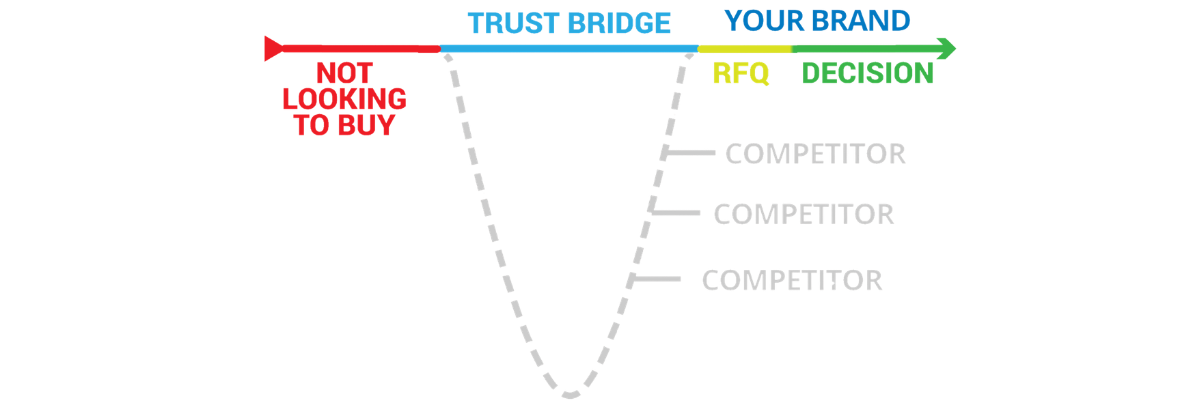
Without an established market presence, a salesperson may have to start at the beginning: Who are we? What do we do? Why should you trust us? Why are we different?
Content and media can begin answering those questions long before the first sales conversation. By the time a prospect engages with sales, they may already recognize the company, understand its expertise and have some level of confidence in the brand. That doesn’t eliminate the sales process, but it can compress the amount of trust-building that has to happen within it — a meaningful advantage in long, complex B2B sales cycles.
Media Shouldn’t Be Funded With Whatever Is Left Over
Too often, companies fund strategy, creative and content development first, then try to carve media dollars out of whatever remains.
But those investments perform different jobs. Your marketing investment creates something worth seeing. Your media investment makes sure the right people see it. Both should be planned from the beginning.
And increasingly, media shouldn’t be treated as a switch that’s flipped on for a product launch and off three months later. An ongoing presence gives marketers time to build recognition, improve performance, gather meaningful data and understand what the market responds to.
In 2027, Media Has to Be Part of the Plan
 The question is no longer whether media belongs in the marketing plan. In 2027, it has to.
Your customers are being exposed to more content, more competitors and more information than ever before. They’re searching differently, researching independently and increasingly turning to AI-powered tools to help identify and evaluate potential solutions. Simply creating good content and waiting for them to find it isn’t a strategy.
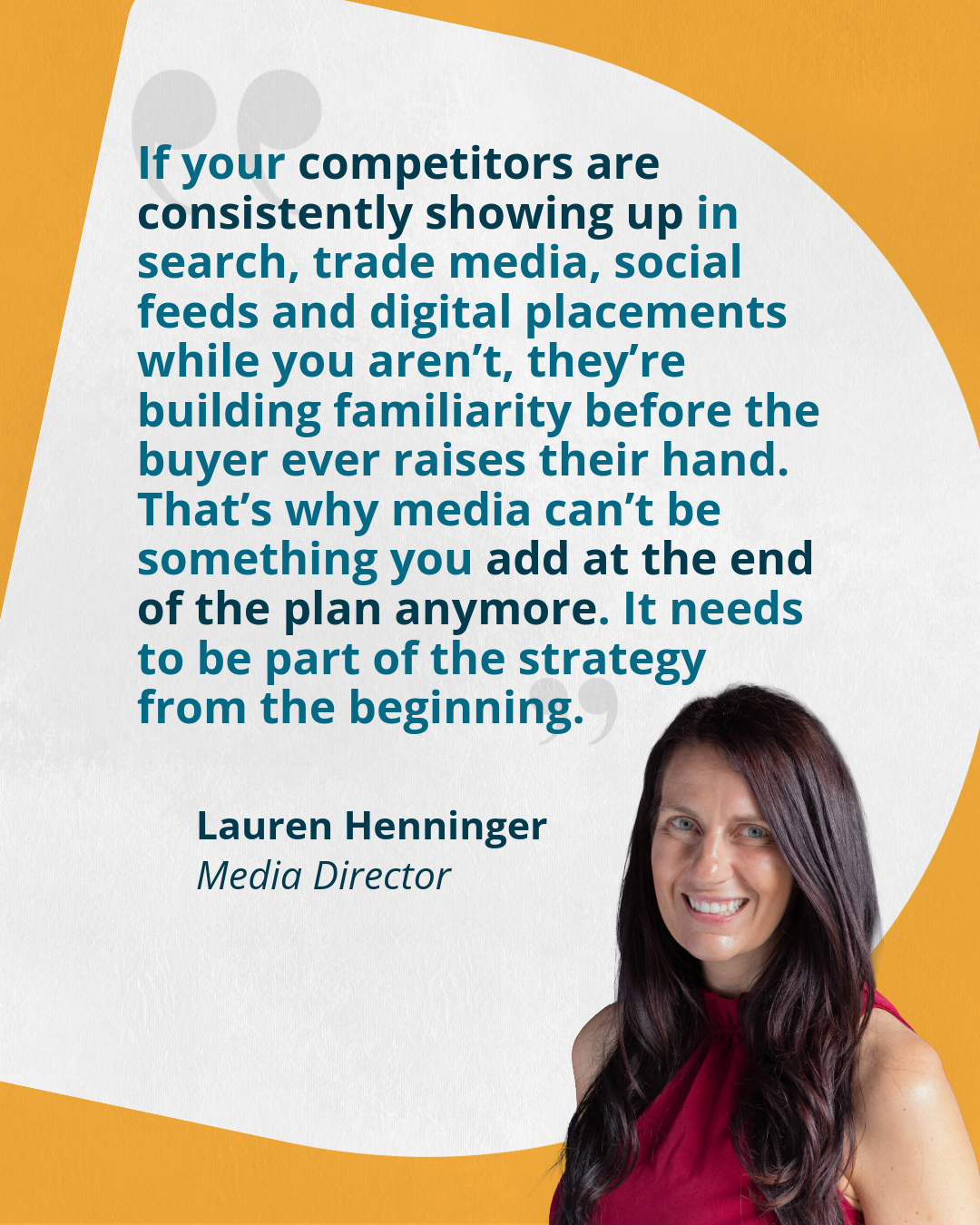
Ultimately, visibility influences consideration, and consideration influences growth. If your competitors are consistently reaching the market while you’re relying primarily on customers to find you, you’re giving them an opportunity to build familiarity, trust and preference before you ever enter the conversation.
That’s why media can no longer be treated as an add-on, an occasional campaign expense or something funded with whatever is left in the budget. It needs to be built into the marketing plan from the beginning.
Because in 2027, creating something worth seeing isn’t enough. You need to make sure your market sees it.
If you’re ready to build a content and media strategy that works together to drive visibility, demand and growth, contact DeanHouston to start the conversation.