

There’s a quiet frustration that shows up in many B2B sales conversations, especially within industrial manufacturing organizations. It usually sounds something like this: “We have the data, we’re just not getting enough out of it.”
What makes that frustrating is that, in most cases, the data isn’t the problem. The CRM is already full of useful information, including account activity, contact history, stalled opportunities, past wins and lost deals. It’s all there, sitting in one place, updated just enough to feel credible.
And yet, when it comes time to decide what to do next — who to call, where to focus, which deal actually matters — most sales teams still rely on instinct because they feel like the system isn’t helping them think.
The Gap No One Designs For
CRM (Customer Relationship Management) platforms were supposed to bring structure and visibility to B2B sales. And in many ways, they did. What they didn’t do, at least not by default, was change behavior. According to our 2026 Sales + Marketing Trend Report, 100% of sales teams that use a CRM reported rarely using it to optimize outreach.
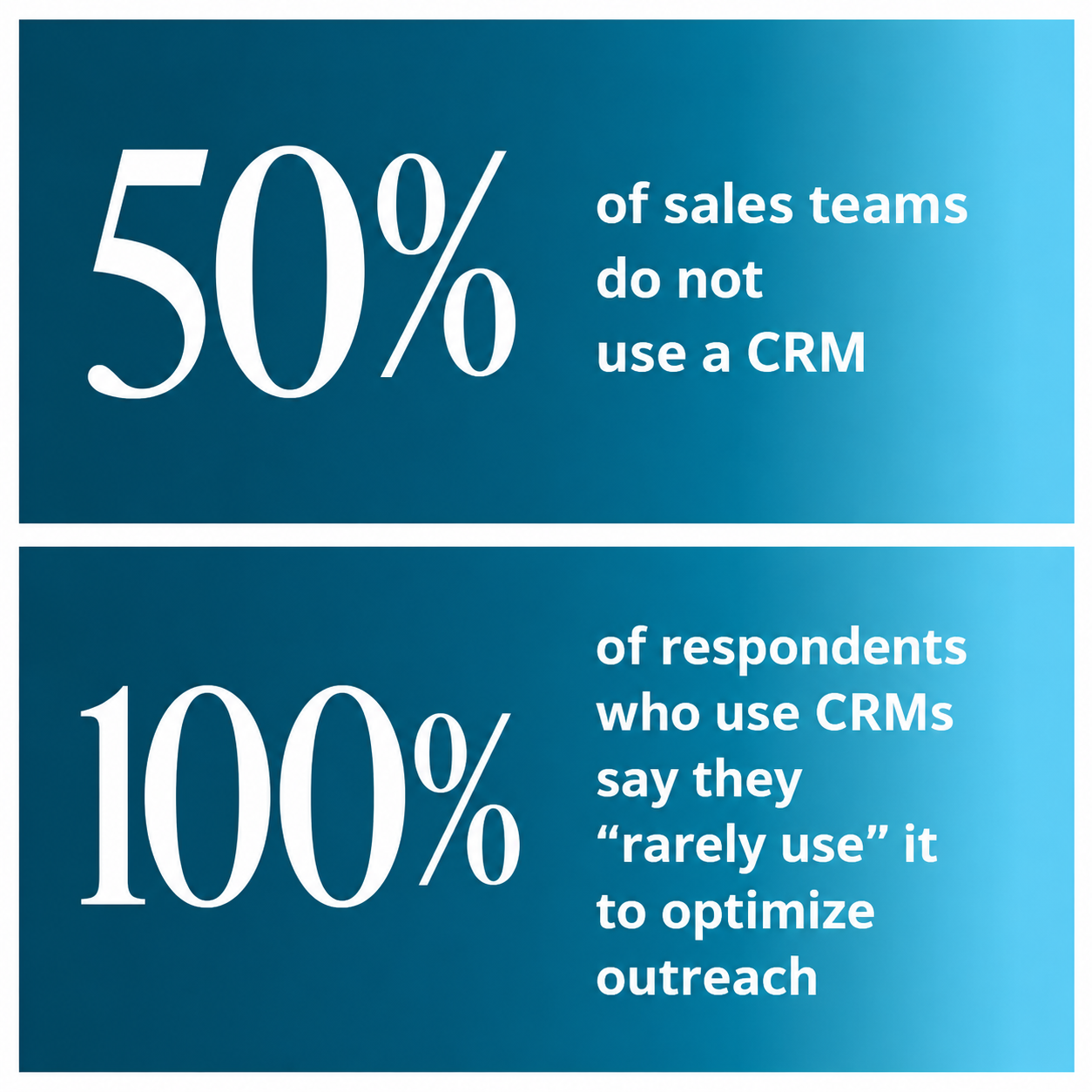 In many industrial marketing and sales environments, the CRM ends up functioning more like a historical archive than an active tool. It captures what already happened, but rarely influences what happens next. That distinction matters more than it seems.
Because once a system becomes focused on documentation rather than direction, it starts creating work rather than reducing it. Sales reps enter notes, update fields and log activities, but the return on that effort isn’t always clear in their day-to-day decisions. So, over time, the CRM becomes something they maintain rather than use.
When Experience Has to Fill the Gaps
Most industrial sales teams are made up of experienced professionals who know their accounts, understand their markets and have built strong relationships over time. When the CRM doesn’t actively guide them, they fall back on what they’ve always relied on — pattern recognition, memory and intuition.
There’s nothing wrong with that. In fact, it’s often what makes great salespeople effective. The problem shows up when that intuition has to do all the work.
Without a system that surfaces priorities, highlights risks or points to opportunities, even strong B2B sales teams end up spending too much time deciding where to focus and not enough time acting on them. That slows down momentum in ways that are easy to overlook but hard to recover from. It’s also why so many teams feel busy without seeing the pipeline move the way it should.
The Opportunity Sitting in Plain Sight
The irony is that most of the signals sales teams need are already sitting inside the CRM. They’re just not being surfaced in a way that drives action:
- Which opportunities have gone quiet?
- Which accounts are engaging but haven’t been contacted?
- Where is deal velocity slowing down?
- Which prospects look like they’re close, but aren’t actually progressing?
These aren’t questions that require more data. They require better use of the existing data. That’s where the shift happens, from treating the CRM as a place to store information to using it as a tool that actively shapes behavior.
Why Industrial Teams Get Stuck Here
 If the potential is that obvious, why do so many B2B manufacturers struggle to get more out of their CRM? In most cases, it isn’t about choosing the wrong platform. It’s about how the system fits into the way the organization actually operates.
Sales teams are often asked to maintain the CRM without seeing a clear benefit in return, which makes it feel like an obligation rather than an advantage. At the same time, there’s rarely a shared definition of what “good” CRM usage looks like, so data quality varies and trust in the system never fully develops.
On top of that, marketing data and sales data don’t always connect in a meaningful way. Industrial marketing teams are generating insights around engagement, behavior and lead quality, but if that information isn’t integrated into the CRM, it never reaches the people responsible for closing deals.
What you end up with is a system that contains a lot of information but doesn’t quite tell a clear story.
What Changes When the CRM Starts Driving Decisions
The organizations that get more out of their CRM don’t necessarily have better technology. What they’ve done differently is redefine what the system is responsible for. Instead of asking sales teams to keep the CRM updated, they expect the CRM to help sales teams decide where to spend their time. That’s a subtle shift, but it changes how the system is used.
When the CRM starts highlighting which accounts need attention, where engagement is dropping off and which opportunities are most likely to move forward, it becomes part of the sales process rather than something that sits alongside it.
At that point, updating the system no longer feels like extra work. It feels like part of doing the job well.
Where Industrial Marketing Comes Into Play
This is also where the connection between industrial marketing and B2B sales becomes more important.
A CRM on its own can tell you what has happened. When it’s connected to marketing data, it starts to give you a clearer picture of what’s likely to happen next. Engagement signals, content interactions and lead scoring all add context to what the sales team is seeing in the pipeline. Instead of working from a static list of opportunities, they’re working from a system that reflects real-time behavior.
That’s where alignment becomes operational rather than just a goal.
Because the Goal Was Never Just Better Tracking

Industrial manufacturing companies don’t invest in CRM systems to create better records. They invest in them to create better outcomes. But that only happens when the system moves beyond tracking activity and starts influencing it. When it helps sales teams prioritize, focus and act with more confidence, the impact shows up quickly — not just in cleaner data, but in stronger pipelines and more consistent performance.
If your CRM feels like something your team has to manage instead of something that helps them sell, you’re not alone. Across B2B sales organizations, that gap between potential and performance shows up more often than most leaders expect. Closing it requires a shift in how the system is used, how data is connected and how decisions are made.
Download the full 2026 Sales + Marketing Trend Report to see how industrial teams are turning CRM data into actionable insight, improving sales and marketing alignment and building pipelines that actually move.
CRM System Frequently Asked Questions
Why isn’t my CRM driving B2B sales?
Most CRM systems don’t drive B2B sales because they’re used to track past activity rather than guide future decisions. When sales teams log data without using it to prioritize outreach or identify opportunities, the CRM becomes a record-keeping tool rather than a revenue driver.
How should B2B manufacturers use a CRM effectively?
B2B manufacturers should use their CRM to guide daily sales activity, not just document it. That means using CRM data to prioritize accounts, identify buying signals, track deal momentum and determine the next best action for each opportunity in the pipeline.
What are common CRM mistakes in industrial sales teams?
Common CRM mistakes in industrial manufacturing include inconsistent data entry, lack of clear usage standards, treating the CRM as a reporting tool for leadership and failing to connect marketing data with sales activity. These issues prevent the system from delivering meaningful insights.
How does CRM improve sales and marketing alignment?
A CRM improves sales and marketing alignment when both teams work from the same data and insights. When marketing engagement data, lead scoring and customer behavior are integrated into the CRM, sales teams gain better context, leading to more informed outreach and higher-quality conversations.
What role does CRM play in industrial marketing strategy?
In industrial marketing, CRM systems serve as the bridge between marketing activity and sales outcomes. They connect campaign performance, lead generation and customer engagement directly to pipeline movement and revenue, making it easier to measure impact and optimize strategy.
How can CRM data increase pipeline growth?
CRM data increases pipeline growth when it’s used to identify high-value opportunities, flag stalled deals and highlight where engagement is strongest. This allows B2B sales teams to focus their time on accounts most likely to convert, improving efficiency and close rates.
Do I need a new CRM system to improve performance?
In most cases, no. The issue is rarely the CRM platform itself. Industrial organizations typically see better results by improving how their existing CRM is used (establishing clear processes, integrating marketing data and using insights to guide decisions) rather than replacing the system.