
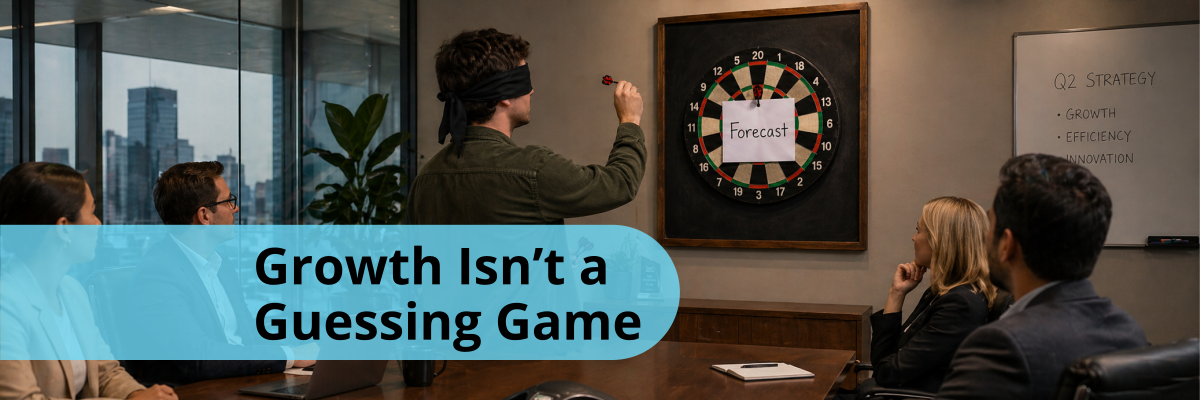
There’s a moment at nearly every industrial manufacturing company when everything feels like it’s lining up. The growth targets are up on the screen, the pipeline appears solid, and the projections tell a reassuring story that the business is trending in the right direction. Leadership sees what they need to see, decisions start moving forward, and before long, budgets are approved and hiring plans are in motion.
And then, somewhere between that moment and the end of the year, things begin to drift. Not in a dramatic, headline-making way, but just enough to create friction. A deal that looked like a lock pushes to the next quarter. A segment that was expected to carry the load underperforms. The forecast still exists, but reality is starting to negotiate with it.

By the time the year closes, nearly half of B2B companies have missed their revenue targets, even though almost all of them fully expected to grow.
So what actually went wrong?
The Confidence Gap No One Plans For
Most organizations don’t have one forecast; they have two versions of the same story running in parallel. There’s the version leadership sees, which is structured, summarized and presented with a level of confidence that makes it actionable. And then there’s the version sales lives every day, where deals are fluid, timelines shift and certainty is often more of a spectrum than a fixed point.
The data from the 2026 Sales + Marketing Trend Report makes this disconnect hard to ignore. Half of sales professionals describe their forecasting process as “not very reliable,” while leadership, looking at the same business, is far more comfortable trusting the numbers.

That gap doesn’t show up on a dashboard, but it shows up everywhere else. It shows up in how aggressively teams plan, how cautiously they execute, and how often results land somewhere between expectation and explanation. When different parts of the organization operate with varying levels of confidence in the same forecast, alignment becomes more of an assumption than a reality.
When “Close Enough” Starts Costing Real Money
Forecasts don’t just sit in a slide deck. They quietly shape the decisions that define the year. They influence how many people you hire, how much you invest in marketing and how confidently you expand into new opportunities. When the forecast is off — or when confidence in it varies depending on who you ask — the impact spreads well beyond missed numbers.
What starts as a forecasting issue quickly becomes a resource allocation issue. You end up committing time, budget and energy based on a version of the future that may not fully exist. And by the time that becomes clear, the decisions tied to that forecast are already in motion.
The Real Fix Isn’t More Data
The instinctive response is to improve accuracy by adding more data, refining the model or tightening the process. Those are all worthwhile efforts, but they don’t address the core issue. Because the real problem isn’t that forecasts are imperfect. It’s that most organizations treat them as if they aren’t.
Every forecast contains a mix of certainty, assumption and risk, but by the time it reaches leadership, it often gets compressed into a single, clean number that implies far more confidence than actually exists behind it. And that’s where things start to break down.
What Changes When You Add Honesty to the Equation
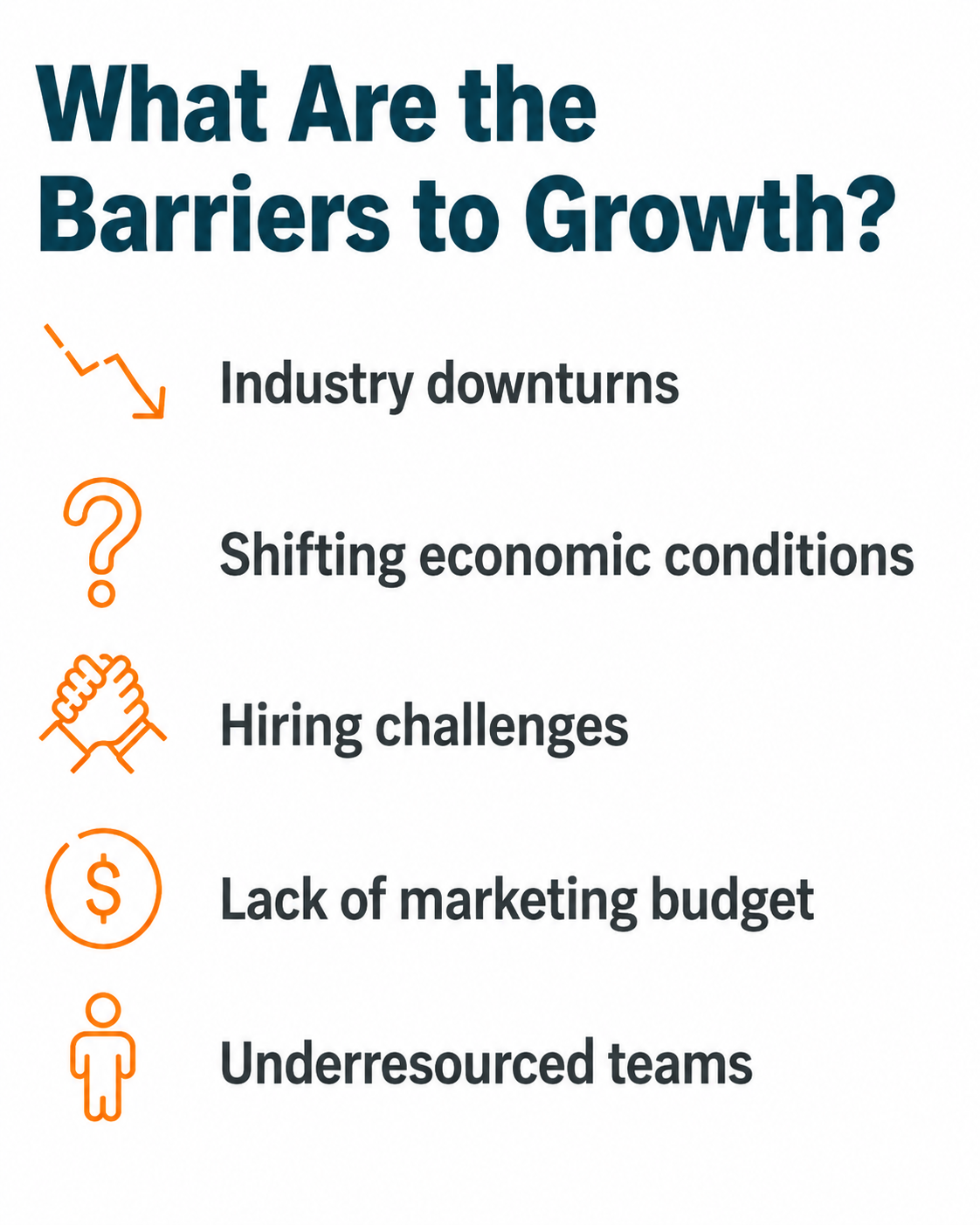 Industrial manufacturers that consistently perform don’t necessarily have perfect forecasts, but they do have a clearer understanding of how much trust to place in their forecasts. Instead of presenting a single number as the answer, they treat forecasting as a range of outcomes, each associated with a different level of confidence. They make it clear which opportunities are solid, which are likely and which still require things to go right.
That shift changes the conversation. Leadership starts making decisions with a more realistic view of risk, sales feels less pressure to overcommit, and marketing can prioritize efforts around opportunities that are more likely to convert. And suddenly, the forecast becomes less about being right and more about being useful.
Because Growth Isn’t a Guessing Game
Most industrial organizations aren’t struggling because they lack data, tools or experience. In many cases, they have more of all three than ever before. What they’re missing is a shared understanding of what’s real, what’s assumed and how confident they should be in the numbers guiding their decisions.
Close that gap, and forecasting stops being something you defend at the end of the quarter. It becomes something you can actually rely on as you build the business.
If this feels familiar, you’re not alone. The disconnect between expectation and reality is showing up across industrial markets — and it’s costing technical products and services companies more than they realize.
Download the full 2026 Sales + Marketing Trend Report to see where forecasting breaks down, where confidence erodes and how B2B teams are rebuilding trust in the numbers that drive their growth.