
Spend five minutes scrolling LinkedIn or walking the floor at any manufacturing conference, and you’ll hear the same conversation repeated again and again: AI is changing everything.
In many ways, that’s true. Artificial intelligence is helping manufacturers work smarter and faster by streamlining operations, uncovering insights from data, supporting product development, and enabling sales and marketing teams to accomplish more in less time. It’s an incredibly powerful technology, and organizations that ignore it risk falling behind.
The more interesting question, however, isn’t whether your business should adopt AI. It’s what happens when every one of your competitors has access to the same technology.
That’s the reality industrial manufacturers are quickly approaching. AI is becoming more accessible, more affordable and more capable every day. Before long, it won’t be a competitive advantage; it will simply be another essential business tool, much like ERP systems, automation or cloud computing. When that happens, companies will once again find themselves looking for ways to stand apart.
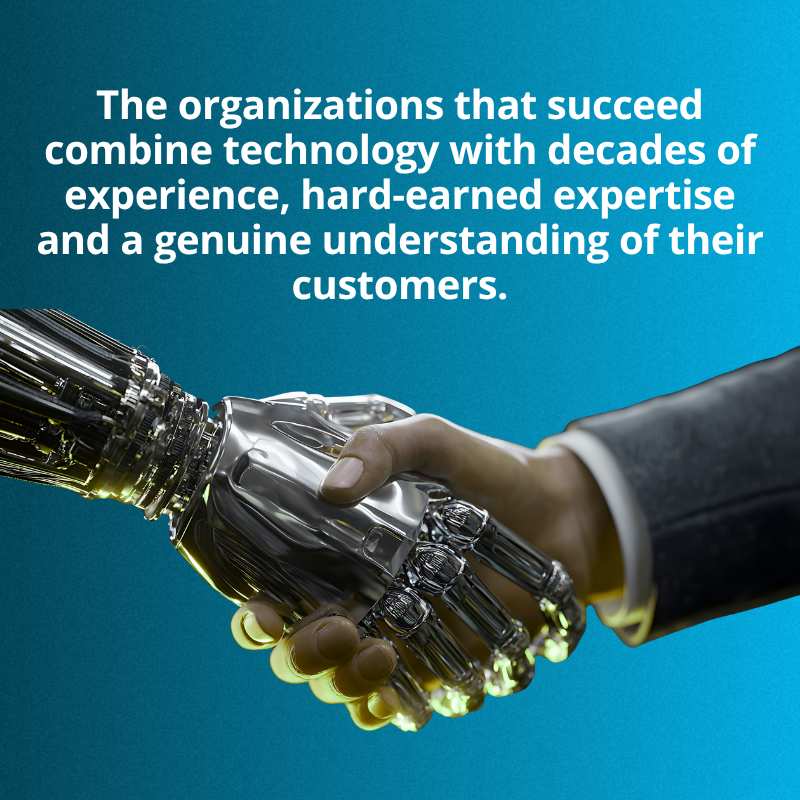
The organizations that succeed won’t necessarily be the ones with the biggest AI investments. They’ll be the ones that combine technology with something competitors can’t easily replicate: decades of experience, hard-earned expertise and a genuine understanding of their customers.
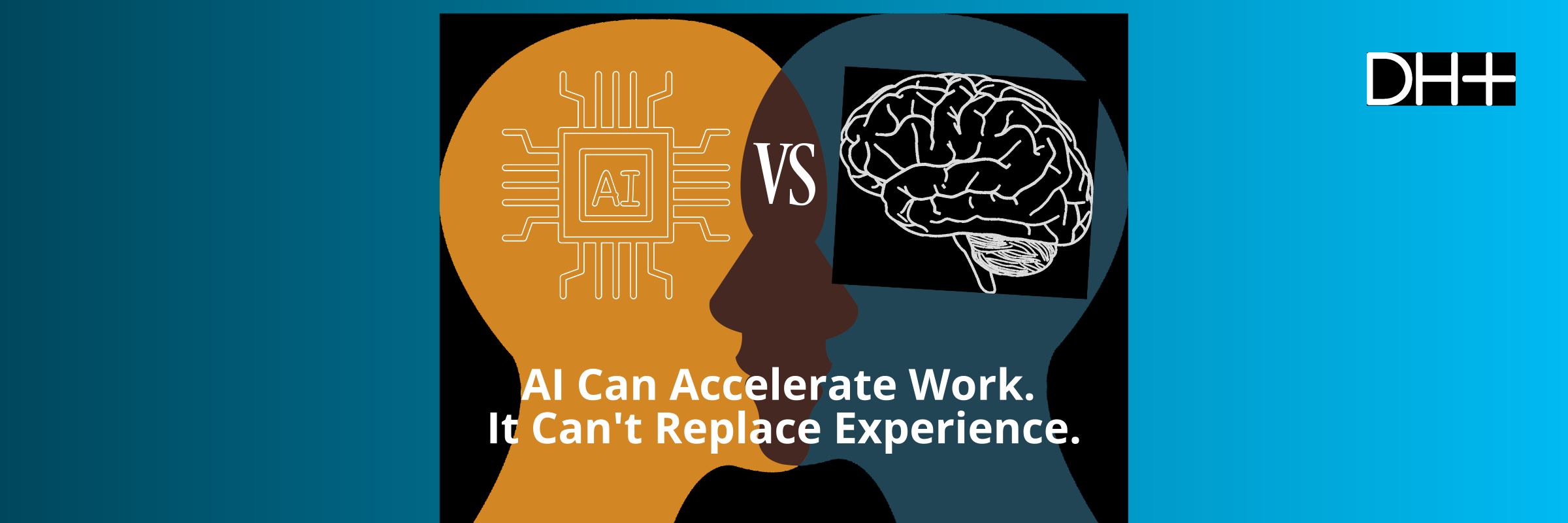
AI Can Accelerate Work. It Can’t Replace Experience.
 Artificial intelligence excels at making work more efficient. It can summarize research, organize information, draft content and help teams move from idea to execution much faster than before. Those capabilities are valuable, and manufacturers should absolutely be exploring where AI can create meaningful business impact.
What AI doesn’t do is create an original experience. It can’t draw on years of solving customer challenges, navigating supply chain disruptions, improving production processes or helping customers recover when something goes wrong. Those insights are earned over time, and they become increasingly valuable as more companies rely on the same technology.
If every B2B manufacturer can generate a blog article, write product descriptions or create a sales presentation in minutes, those assets inevitably become easier to produce – and easier to overlook. Buyers don’t remember who published the most content. They remember who challenged their thinking, helped them solve a difficult problem or shared an insight they couldn’t find anywhere else.
That’s where expertise becomes the true competitive advantage.
Your Greatest Competitive Advantage Is Already Inside Your Organization
Every technical products manufacturing company has people whose knowledge is difficult to replace. They’re the engineer everyone calls when a project becomes unusually complex, the field service technician who has encountered nearly every application imaginable, the product manager who understands not only how a solution works but why it was designed that way, and the salesperson customers trust because they consistently offer thoughtful guidance instead of rehearsed pitches.
Collectively, these individuals represent an extraordinary business asset. Yet much of what they know never reaches prospective customers because it remains trapped inside meetings, emails and day-to-day conversations.
Forward-thinking industrial manufacturers recognize that marketing isn’t about replacing those voices with AI-generated content. It’s about helping experts share their knowledge more consistently, whether through articles, videos, webinars, customer stories or conversations that demonstrate genuine expertise.
Buyers Need Confidence More Than They Need Information
 Think about the last significant purchase you made, whether for your business or your personal life. You probably conducted extensive research before speaking with anyone, comparing options, reading reviews, watching videos and perhaps even asking an AI tool to summarize your choices. Today’s industrial buyers follow much the same path.
By the time they contact your sales team, they already have access to more information than any previous generation of buyers. What they’re still searching for is confidence that they’re choosing the right partner. They want to know that your organization understands their business, appreciates the risks involved and will continue delivering value long after the contract is signed.
That confidence isn’t built through polished marketing language alone. It’s built through credibility, demonstrated expertise and authentic customer relationships.
The Companies That Stand Out Will Always Be the Most Human
Artificial intelligence will continue to evolve, and B2B manufacturers should embrace the opportunities it creates. Businesses that use AI thoughtfully will become more efficient, more responsive and better equipped to serve their customers.
At the same time, AI is making one truth even clearer. As technology becomes more common, authentic expertise becomes more valuable. Buyers can tell the difference between information that’s been assembled by a machine and insight that’s been earned through years of experience.
B2B manufacturing has always been a relationship-driven industry built on solving difficult problems, honoring commitments and creating long-term partnerships. Those qualities aren’t becoming less important because AI exists. They’re becoming the very things that separate great companies from everyone else.
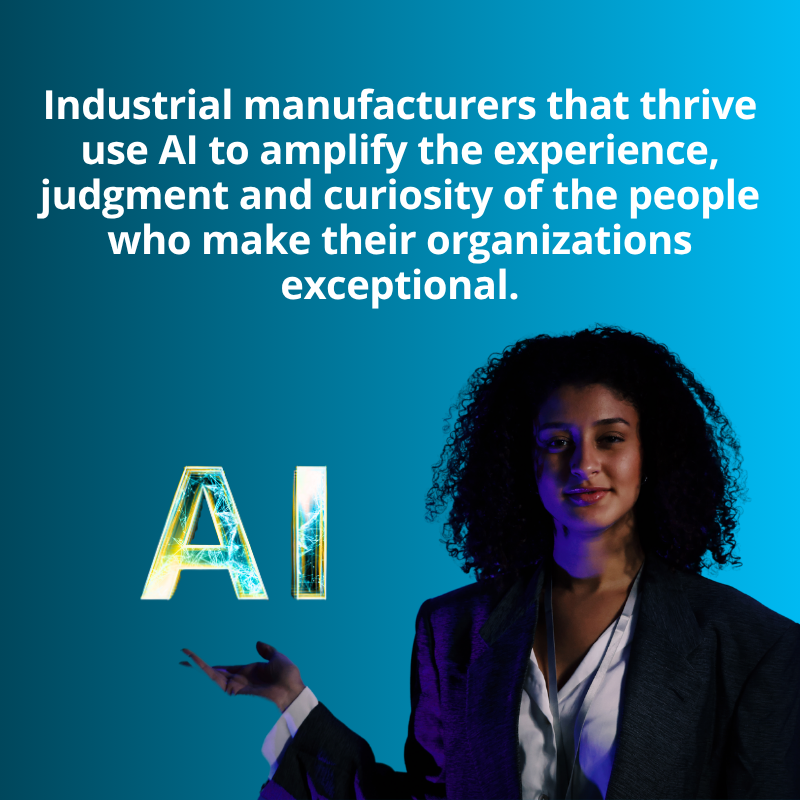
The industrial manufacturers that thrive over the next decade won’t simply adopt AI faster than their competitors. They’ll use it to amplify the experience, judgment and curiosity of the people who make their organizations exceptional. In a marketplace where everyone has access to the same technology, human expertise remains the one advantage that can’t be automated, copied or commoditized.
If you’re ready to turn your organization’s expertise into a lasting competitive advantage, let’s start a conversation.