
Gone are the days when the lowest price won the deal. Today, businesses aren’t just looking for a vendor; they’re looking for a partner. Someone they can trust to help them grow, adapt and succeed. The question on every B2B buyer’s mind has shifted from “Who’s the cheapest?” to “Who’s got my back?”
Across industrial manufacturing, procurement and engineering, buyers are operating in an environment defined by uncertainty. Supply chains remain unpredictable, labor shortages continue to challenge production, capital investments face greater scrutiny, projects are more complex, and the cost of making the wrong decision has never been higher. In that environment, customers aren’t just purchasing products. They’re investing in peace of mind.
Price Opens the Conversation. Confidence Wins the Business.
Every B2B manufacturer has competitors offering similar products. Many have comparable specifications, certifications and production capabilities. In some industries, it’s becoming increasingly difficult to differentiate based on technical features alone.
When that happens, companies often default to competing on price. The problem is that price is one of the few competitive advantages that’s almost impossible to sustain. Someone can almost always be cheaper.
Peace of mind, however, is much harder to replicate. It comes from:
- Knowing a supplier understands your application
- Working with people who ask the right questions before recommending a solution
- Dependable delivery
- Responsive communication
- A history of solving problems when challenges inevitably arise
Some of the world’s most successful industrial companies have built their reputations around this very idea.
Take Caterpillar, for example. While its equipment is recognized for performance and durability, the company’s competitive advantage extends well beyond the machine itself. Its global dealer network, predictive maintenance technologies, lifecycle service agreements and commitment to maximizing equipment uptime have become just as valuable as the products it manufactures. Caterpillar understands that a machine sitting idle costs customers far more than the purchase price, so it has invested heavily in expert support and long-term partnerships that reduce operational risk.
Grainger has taken a similar approach. Rather than competing solely on catalog size or pricing, it has become a trusted operational partner for manufacturers through inventory management programs, technical expertise and supply chain solutions that help customers improve productivity and reduce downtime. Customers don’t simply buy products from Grainger; they rely on the company’s knowledge to keep their operations moving.
Neither company leads with the message, “We’re the lowest-priced option.” They lead with outcomes.
The Real Risk Isn’t Paying More. It’s Choosing Wrong.
Imagine you’re responsible for a multi-million-dollar manufacturing project. Would you choose the lowest-priced supplier if you weren’t convinced they could deliver? Most decision-makers wouldn’t. Because the cost of selecting the wrong partner is almost always greater than the savings from selecting the lowest bid:
- Late deliveries delay production schedules
- Poor communication creates uncertainty
- Limited technical expertise can lead to redesigns
- Equipment performance issues result in downtime
The cheapest proposal can quickly become the most expensive decision. That’s why many B2B buyers spend so much time researching suppliers before they ever contact sales. Buyers aren’t simply comparing products – they’re on the hunt for proof. Proof that a company truly gets their business, has tackled the same challenges they’re facing and will still be by their side long after the ink dries on that purchase order.
Expertise Has Become Part of the Product.
Industrial manufacturers often think they’re selling components, equipment or systems. Customers see something different. They see:
- Reduced risk
- Operational continuity
- Access to engineers who understand their application
- Partners who can help them avoid costly mistakes
Caterpillar doesn’t simply manufacture equipment. It surrounds that equipment with dealer expertise, digital monitoring, preventative maintenance programs and lifecycle support designed to maximize uptime. The machine is only part of the solution. The expertise behind it is what creates long-term customer value.
Grainger follows the same philosophy. Customers rely on its specialists to optimize inventory, streamline procurement and solve operational challenges before they become costly problems. In many cases, customers stay with Grainger because of the knowledge and service they receive, not because every item carries the lowest price.
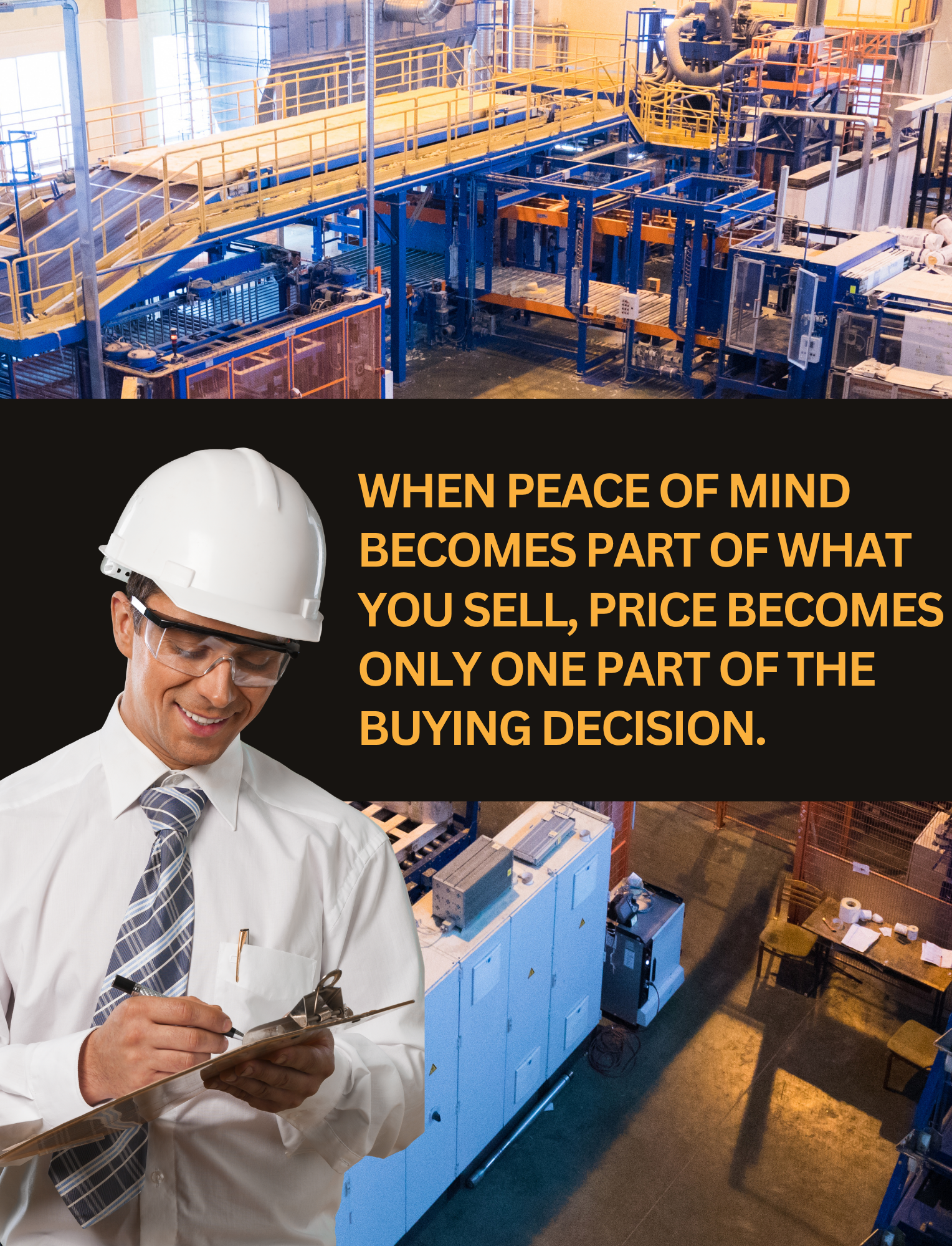
The lesson is simple: when expertise and peace of mind become part of what you sell, price becomes only one part of the buying decision.
Sales Has Changed. So Has Marketing.
The traditional handoff between marketing and sales is disappearing. By the time a prospect reaches out, they’ve often spent weeks researching online, comparing suppliers and narrowing their list of potential partners. That means marketing is no longer responsible for simply generating awareness. It’s responsible for building confidence before the first conversation ever takes place.
Sales then has the opportunity to reinforce that trust by focusing less on presentations and more on consultation. What are your biggest operational challenges? What does success look like? Where is the greatest risk?
Only after understanding the customer’s business do they begin recommending solutions. That’s a very different conversation than discussing price.
How Marketing Can Help.
Industrial manufacturers will always need to be cost-competitive. Price matters, and it always will. But in today’s market, price alone rarely creates a lasting competitive advantage. Customers are looking for suppliers who reduce uncertainty, solve problems and make their jobs easier. They want partners who understand their business, communicate clearly and deliver on their promises.
That’s where marketing has evolved. The best manufacturing marketing isn’t about creating clever campaigns or generating more clicks. It’s about building confidence before a prospect ever speaks with sales. Every case study, technical article, application guide, customer story and educational video helps answer the questions buyers are already asking:
- Can this company solve my problem?
- Do they understand my industry?
- Can I trust them to deliver?
When marketing consistently demonstrates expertise rather than simply promoting products and prices, it shortens sales cycles, strengthens customer relationships, and shifts conversations away from price and toward value.
Caterpillar has built an ecosystem centered on customer success. Grainger has transformed operational expertise into a competitive advantage. Their products matter, but so does the confidence they’ve built through every customer interaction.
Manufacturers of every size have the same opportunity.
By using marketing to educate, share expertise and demonstrate a deep understanding of customer challenges, companies can earn trust long before the first quote is requested. And when buyers already believe in your expertise, price becomes just one factor in the decision – not the deciding factor.
Because the manufacturers that win tomorrow won’t necessarily be the ones with the lowest prices. They’ll be the ones their customers trust the most.
At DeanHouston, we help industrial manufacturers build that confidence through business-first marketing strategies that position their expertise, strengthen customer relationships and create lasting competitive advantage. If you’re ready to compete on more than price, let’s start a conversation.